Japanese Fleet Establishes Blockade Around Tsingtao
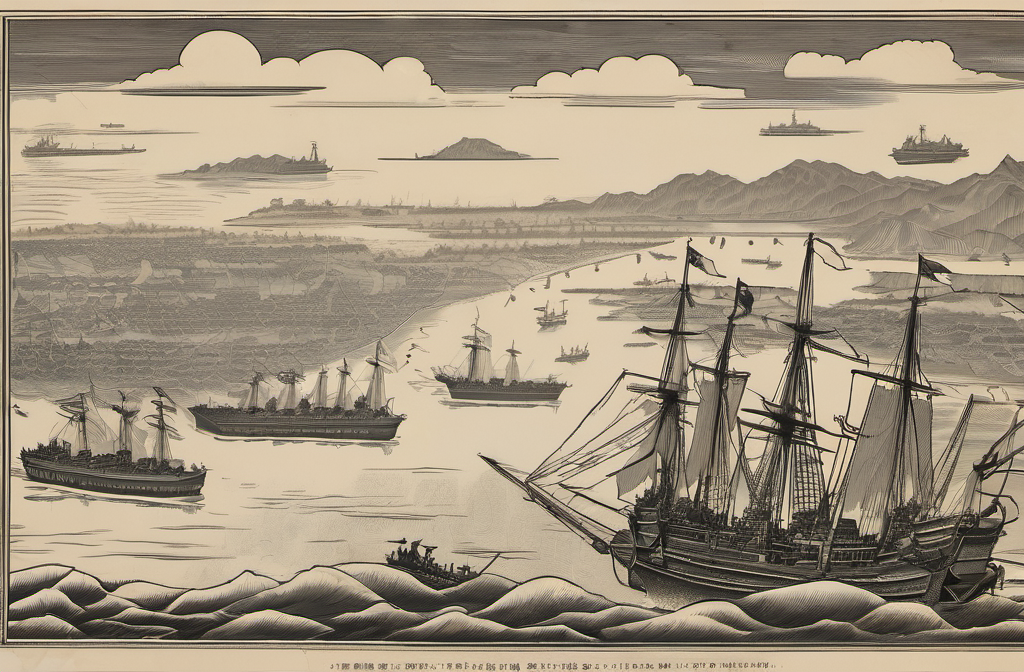
Vice Admiral Sadakichi Kato, commanding the Japanese naval forces, has declared a full maritime blockade around Tsingtao, the German port city on China's Shandong peninsula. This strategic move marks the onset of what is expected to be a prolonged siege against the German-held fortifications, which began on August 27th, 1914. The blockade aims to cut off all supply lines and communication to the beleaguered city, ensuring that the naval and military operations can proceed unimpeded.
The siege of Tsingtao is the first major conflict involving Japanese forces in the ongoing World War I. As an ally to Britain, Japan has mobilized its navy and troops to aid in the global coalition against Imperial Germany. The city of Tsingtao, with its strategically vital port and fortifications, is a key objective in the war efforts of the Allies in the Pacific and Asian theatres. The British have provided logistical support, but Japanese forces are the primary attackers.
Local observers and residents report a somber mood as tensions mount. The blockade has already led to shortages of food and supplies in Tsingtao, and the city's inhabitants are bracing themselves for the prolonged conflict ahead. The international community watches with great interest, as the siege of Tsingtao is the first major land engagement in the region and is expected to have significant geopolitical implications for the post-war order in East Asia.